Introduction
The decision of the AI photo editor to take in 2026 is no longer about novelty. It concerns speed, control, the quality of the output, and the ability of a tool to fit into actual production processes. Several weeks of practical experimentation in marketing resources, product images, social media, and trial creative output allowed me to reduce the scope to those platforms that will always provide outcomes to the time-starved practitioner.
The list concentrates on the tools that provide a balance between automation and accuracy, consider the current content pipelines, and are worth their expense within the stack of a serious creator.
Best AI Photo Editor Tools at a Glance
| Tool | Primary Use Case | Modalities | Platforms | Free Plan |
| Magic Hour | Advanced AI photo and video editing | Photo, video, audio | Web | Yes |
| Adobe Photoshop AI | Professional photo manipulation | Photo | Desktop, Web | Limited |
| Runway | Creative image and video generation | Photo, video | Web | Yes |
| Canva AI | Fast marketing and social visuals | Photo, design | Web, Mobile | Yes |
| Pixlr | Lightweight AI photo editing | Photo | Web | Yes |
#1 Magic Hour
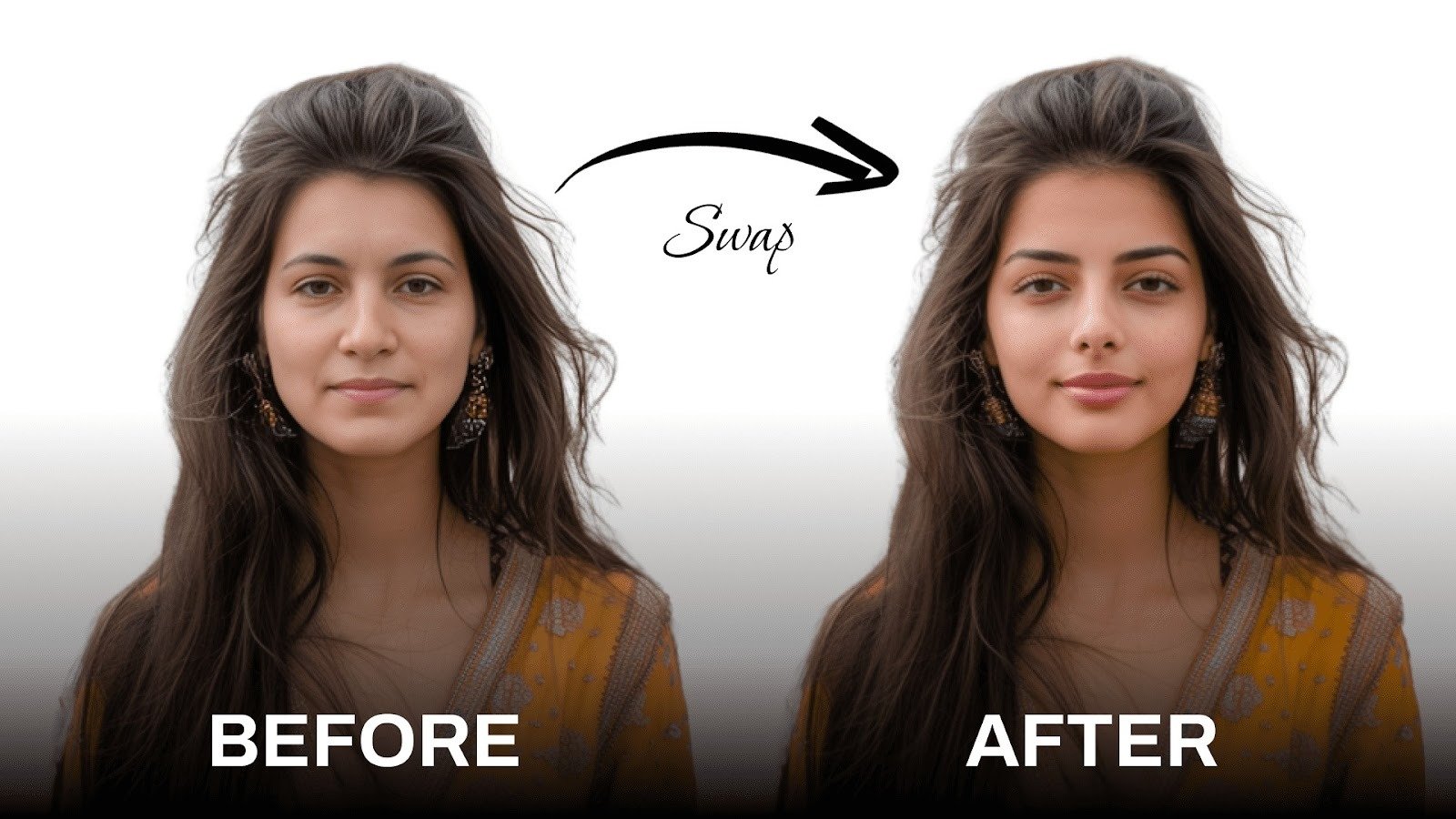
Magic Hour won the first position since it can cope with a complicated creative work without making you slow down. It was also able to provide clean edits, correct transformations, and predictable results in both photos and short-form video during testing. The platform has a unique feature of integrating high-end automation with controls professionals who are required. Notably, in actual processes, functions such as AI face swap were effective on character-based content, brand localization, and testing creativity did not compromise the integrity of images.
Pros
- High-quality AI results with minimal artifacts
- Supports both photo and video workflows
- Clean, intuitive interface for advanced tools
- Fast processing even at higher resolutions
Cons
- Advanced features require a learning curve
- Free plan has usage limits
This is difficult to overcome in the event that you require one platform to support experimentation to production. During the other section of my tests, I used Magic Hour as an AI photo editor to quickly cycle through product visuals with the same lighting and texture across campaigns.
Price: Free, Creator: it’s $15/mo for monthly and $10/mo for annual, Pro: $49/month.
#2 Adobe Photoshop AI
Adobe Photoshop is a legend in terms of professional image editing, and the AI capabilities are no longer the version that was added on with a screwdriver. Background reconstruction, generative fill and smart object selection is safe enough to use in client facing deliverables.
Pros
- Industry-standard precision and control
- Deep integration with Creative Cloud
- Strong generative editing tools
Cons
- Subscription cost adds up
- Overkill for simple tasks
If your work demands pixel-level accuracy and tight brand control, Photoshop is still a safe choice.
Price: Subscription-based, no full free plan
#3 Runway
The Runway is at the crossroad of creativity and experimentation. Although it is video-based, its photo utilities can now do much, particularly concept art, and visual ideation.
Pros
- Strong generative models
- Excellent for creative exploration
- Active product innovation
Cons
- Less predictable outputs
- Limited fine-grain photo controls
For creators pushing visual boundaries, Runway offers flexibility that few tools match.
Price: Free tier with paid upgrades
#4 Canva AI
Canva AI is speed optimized. It is not attempting to overtake professional editors; it is aiming at removing the pain of marketers and founders who demand results fast.
Pros
- Extremely easy to use
- Strong templates and brand tools
- Fast turnaround
Cons
- Limited advanced editing
- Less control over final output
If speed matters more than precision, Canva remains a practical option.
Price: Free plan available; Pro tier unlocks AI features
#5 Pixlr
Pixlr is also access-oriented. It completely works within the browser and provides fairly powerful AI options in the pursuit of lightweight editing projects.
Pros
- No installation required
- Simple AI enhancements
- Good for quick fixes
Cons
- Not suited for complex workflows
- Limited scalability
For quick edits without commitment, Pixlr does the job.
Price: Free with ads; paid plans remove limits
See also: Tech Group21.Com – Discover Cutting-Edge Tech Solutions From Tech Group21
How We Chose These Tools
I tested both platforms in real life situations: marketing creatives, product pictures, social pictures, and experimental pictures. Such criteria were output quality, speed, control, learning curve, and transparency of pricing. Tools were required to show the same results and not great demos.
Market Landscape and Trends
The future of the 2026 AI photo editing market is converged in single creative platforms. Photo video and automation tools are replacing single purpose editors. Even the most successful products are not only generative novelty but also predictability.
Final Takeaway
The most balanced option is Magic Hour that will satisfy the requirements of professionals in power and reliability. Photoshop is still preferred in accuracy tasks, whereas Canva and Pixlr can be used where time is the primary concern. I suggest trying out a minimum of two tools to identify the ideal one to use in your workflow.
Frequently Asked Questions
1. What is the best AI photo editor among the professionals?
Photoshop and Magic Hour have the highest level of control and quality.
2. Does it require free plans to do actual work?
For testing, yes. Production tends to demand paid levels.
3. Do designers get substituted by these tools?
No. They enhance talented individuals.
4. Is AI editing a safe brand-asset editor?
Yes, under review and control of outputs.
5. What should I test first?
Quality and consistency of image and export flexibility.